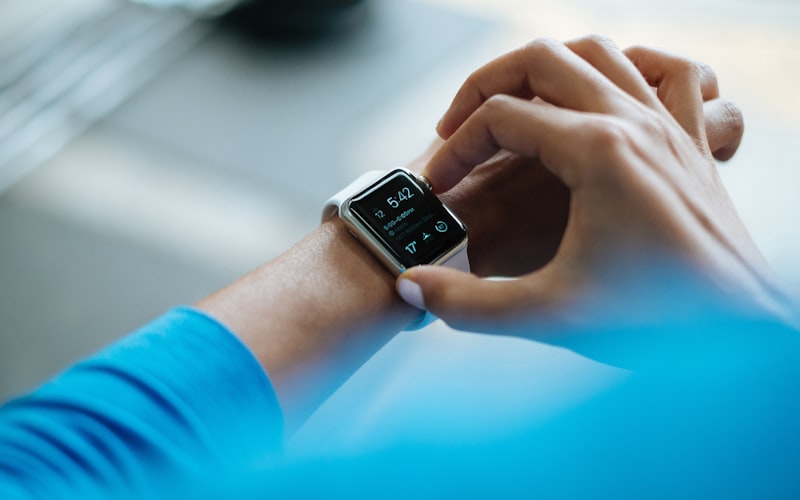
Your skin is an organ of expression. Beyond its role as a protective barrier, it functions as a real-time readout of your sympathetic nervous system, broadcasting your internal arousal state through subtle changes in electrical conductance that are invisible to the naked eye but measurable by modern sensors.
Electrodermal activity, formerly known as galvanic skin response, is the measure of electrical conductance changes at the surface of the skin caused by variations in sweat gland activity. Unlike the sweat produced during exercise for thermoregulation, the sweat that drives EDA is produced by eccrine glands controlled exclusively by the sympathetic nervous system in response to emotional arousal, cognitive load, and stress. This makes EDA one of the purest available windows into sympathetic nervous system activation.
The measurement has a rich scientific history spanning more than a century, from early psychophysiology laboratories to modern lie detection applications, and now to wearable health technology. As sensors have miniaturised and algorithms have matured, EDA has transitioned from a research curiosity to a practical biomarker for real-time stress detection, emotional health monitoring, and autonomic nervous system assessment.
1. The Science of Skin Conductance
The electrical properties of human skin are determined primarily by the activity of eccrine sweat glands, which are distributed across the entire body surface but are most densely concentrated on the palms, soles, and forehead. These glands are innervated exclusively by the sympathetic division of the autonomic nervous system through cholinergic nerve fibres, a unique arrangement in which the sympathetic system uses acetylcholine rather than noradrenaline as its neurotransmitter.
When the sympathetic nervous system is activated, whether by a stressful event, an emotional stimulus, cognitive effort, or a physical threat, the eccrine sweat glands increase their secretory activity. Even before visible perspiration appears, the microscopic filling of sweat ducts with ionic fluid increases the electrical conductance of the skin. This change can be detected by passing a small, imperceptible current between two electrodes placed on the skin surface and measuring the resulting change in conductance, typically expressed in microsiemens.
The elegance of EDA as a physiological measure lies in its specificity. While heart rate is influenced by both sympathetic and parasympathetic activity, and while many other autonomic measures reflect a blend of inputs, the eccrine sweat glands are controlled exclusively by the sympathetic nervous system. This means that any change in electrodermal activity reflects a change in sympathetic arousal, without the confounding influence of parasympathetic modulation. This makes EDA the most direct non-invasive measure of sympathetic nervous system activation available in ambulatory settings.
3M+
Eccrine sweat glands distributed across the human body
1-3s
Typical latency from stimulus to detectable EDA response
100%
Sympathetically mediated — no parasympathetic confounding
Electrodermal activity is the only non-invasive peripheral measure of pure sympathetic nervous system activation, making it uniquely valuable for detecting stress, emotional arousal, and autonomic imbalance without the confounding effects of parasympathetic input.
2. Tonic vs Phasic EDA: Two Dimensions of Arousal
The electrodermal signal contains two distinct components that carry different physiological information and require different analytical approaches. Understanding this distinction is essential for correctly interpreting EDA data, whether from laboratory equipment or consumer wearable devices.
Tonic skin conductance level represents the slowly changing baseline level of electrical conductance, reflecting the overall background level of sympathetic arousal. Tonic SCL typically ranges from 2 to 20 microsiemens and varies across individuals, body sites, and conditions. A person who is chronically stressed, anxious, or sleep-deprived will tend to have a higher tonic SCL than the same individual in a rested, calm state. Tonic SCL changes slowly, over minutes to hours, and reflects the cumulative sympathetic load on the nervous system.
Phasic skin conductance responses are rapid, transient increases in conductance superimposed on the tonic level. Each SCR represents a discrete sympathetic activation event, triggered by a specific stimulus such as a startling sound, an emotionally provocative image, a moment of cognitive effort, or an unexpected touch. Phasic SCRs typically begin one to three seconds after the triggering stimulus, peak within three to five seconds, and resolve within 10 to 20 seconds. Their amplitude, frequency, and recovery time provide information about the intensity and persistence of the sympathetic response.
Tonic vs Phasic EDA Components
The EDA signal combines a slowly changing tonic baseline (dashed line) reflecting overall arousal with rapid phasic responses (peaks) triggered by discrete stimuli. Both components carry distinct physiological information.
In addition to stimulus-evoked SCRs, the skin also produces non-specific skin conductance responses, or NS-SCRs, which occur spontaneously without an identifiable external trigger. The frequency of NS-SCRs, typically measured as the number of responses per minute, is a sensitive indicator of background sympathetic arousal. Healthy, relaxed individuals produce approximately one to three NS-SCRs per minute, while stressed or anxious individuals may produce five to ten or more. The NS-SCR rate during sleep is used in research as a marker of sleep quality and nocturnal autonomic regulation.
3. Eccrine Sweat Glands: The Sympathetic Sensor
The eccrine sweat gland is remarkably sophisticated for such a small structure. Each gland consists of a coiled secretory portion embedded in the dermis, connected to the skin surface by a spiralling duct that traverses the epidermis. The secretory coil produces a dilute fluid containing primarily water, sodium chloride, and small quantities of urea, lactate, and potassium. This ionic fluid is the medium through which changes in sweat gland activity alter the electrical conductance of the skin.
The density of eccrine glands varies dramatically across the body. The palms and soles contain approximately 600 to 700 glands per square centimetre, the highest concentration anywhere on the body. The forehead has approximately 175 per square centimetre, while the trunk and limbs average 100 to 150. This distribution reflects the dual function of eccrine glands: thermoregulatory sweating occurs primarily on the trunk and limbs, while emotionally driven sweating is concentrated on the palms, soles, and face.
The preferential activation of palmar and plantar eccrine glands during emotional and cognitive arousal is an evolutionary adaptation. Moist palms improve grip strength, which would have been advantageous during fight-or-flight situations requiring climbing, grasping, or wielding tools. This same mechanism is what produces the clammy hands associated with anxiety, nervousness, and performance pressure, and it is what makes the palms and fingertips the optimal locations for EDA measurement.
4. Emotional Arousal Detection and Clinical Applications
The sensitivity of EDA to emotional arousal has made it one of the most widely used measures in experimental psychology, affective neuroscience, and clinical psychophysiology. The galvanic skin response, as it was historically called, has been employed in research for over a century, contributing to foundational discoveries about emotion, attention, decision-making, and consciousness.
In clinical settings, EDA is used extensively in the assessment and treatment of anxiety disorders, post-traumatic stress disorder, phobias, and dissociative conditions. During exposure therapy for phobias, for example, clinicians monitor EDA to objectively track the patient's fear response and verify that habituation is occurring across repeated exposures. A successful course of exposure therapy produces a measurable reduction in SCR amplitude to the feared stimulus, providing objective evidence of therapeutic progress that complements the patient's subjective reports.
- Anxiety and stress assessment. EDA provides an objective, continuous measure of sympathetic arousal that is not subject to the reporting biases that affect self-report questionnaires. Elevated tonic SCL and increased NS-SCR frequency during daily activities indicate chronic sympathetic overdrive, even in individuals who do not subjectively identify as stressed.
- Sleep quality assessment. The pattern of EDA during sleep reflects the quality of autonomic regulation throughout the night. Elevated EDA activity during sleep, particularly during the first half of the night when deep sleep should predominate, suggests incomplete sympathetic downregulation and is associated with poor subjective sleep quality and reduced next-day cognitive performance.
- Emotional awareness training. For individuals with alexithymia, the difficulty identifying and describing emotions, or for those recovering from trauma who have become disconnected from their bodily signals, real-time EDA feedback can serve as a bridge between physiological arousal and conscious emotional awareness.
- Cognitive load and attention monitoring. EDA responses are reliably evoked by novel, unexpected, or cognitively demanding stimuli. This property makes EDA useful for assessing cognitive load, sustained attention, and the point at which cognitive resources become overwhelmed, with applications in ergonomics, education, and human-computer interaction research.
- Biofeedback for stress management. EDA biofeedback, in which individuals observe their own skin conductance in real time and practice techniques to reduce it, is an established intervention for generalised anxiety disorder, chronic stress, and related conditions. The immediacy of the EDA signal makes it particularly effective for biofeedback, as individuals can observe the physiological effect of a relaxation technique within seconds of initiating it.
EDA reveals the stress you cannot feel. Many individuals who report feeling fine show objectively elevated sympathetic arousal on EDA measurement, a disconnection between subjective experience and physiological reality that continuous monitoring can bridge.
5. EDA in Clinical Research: A Century of Discovery
The history of electrodermal measurement in science spans over 130 years, making it one of the oldest continuously used psychophysiological measures. The phenomenon was first described independently by French neurologist Jean-Baptiste de Tarchanoff in 1889 and Swiss physiologist Romain Vigouroux in 1879, who observed that the electrical properties of the skin changed in response to emotional stimulation.
Carl Jung adopted the galvanic skin response as a tool for his word association experiments in the early 1900s, using it to detect emotionally charged associations that patients might consciously suppress. This application established the fundamental principle that EDA reflects unconscious emotional processing, a property that has been leveraged in research on implicit attitudes, subliminal perception, and emotional memory ever since.
In the mid-twentieth century, EDA became central to the development of the polygraph, or lie detector, based on the premise that deceptive responses generate greater sympathetic arousal than truthful ones. While the forensic application of the polygraph remains controversial and of limited reliability, the underlying principle that EDA reflects the autonomic correlates of emotional and cognitive engagement is well-established and continues to drive productive research across multiple disciplines.
More recent research has extended the clinical applications of EDA into neurological assessment. Patients with damage to the ventromedial prefrontal cortex, a brain region critical for decision-making, show absent EDA responses to risky choices, even when they can verbally articulate the risks involved. This finding, demonstrated in the Iowa Gambling Task, revealed that emotional body signals, indexed by EDA, play a critical role in guiding adaptive decision-making, and that the absence of these signals leads to catastrophic real-world decisions despite intact intellectual capacity.
6. Wearable EDA Sensors: Technology and Challenges
The miniaturisation of EDA sensors for wearable devices represents both a significant technological achievement and an ongoing engineering challenge. Traditional laboratory EDA measurement uses two electrodes filled with isotonic electrode gel, placed on adjacent fingers or the palm, with a known constant voltage applied across them. The resulting current flow, proportional to skin conductance, is amplified, digitised, and recorded at high sampling rates.
Wearable devices must achieve comparable measurement quality under far more challenging conditions. The electrodes are typically dry, without conductive gel, which increases contact impedance and noise. The measurement site is often the wrist or finger rather than the optimal palmar location. Motion artefacts from daily activities produce spurious conductance changes that must be algorithmically distinguished from genuine sympathetic responses. Temperature changes, ambient humidity, and variations in electrode contact pressure all introduce additional confounders.
Despite these challenges, modern wearable EDA sensors have achieved impressive performance for trend detection and pattern recognition. Advanced signal processing algorithms can decompose the raw EDA signal into its tonic and phasic components in real time, filter out motion artefacts using concurrent accelerometer data, and correct for environmental confounders using temperature and humidity sensors. The result is a continuous stream of sympathetic arousal data that, while less precise than laboratory equipment on a moment-to-moment basis, is extraordinarily powerful for detecting patterns over hours, days, and weeks.
EDA Response Pattern During a Typical Stress Protocol
During a standardised stress protocol, individuals with high stress reactivity show larger EDA increases and slower recovery, while those with lower reactivity show attenuated responses and faster return to baseline.
7. Stress Detection Algorithms: From Signal to Insight
Translating raw EDA data into meaningful health insights requires sophisticated algorithmic processing that goes far beyond simple threshold detection. Modern stress detection algorithms employ multi-stage signal processing pipelines that clean, decompose, classify, and contextualise the EDA signal before presenting actionable information to the user.
The first stage involves artefact removal. Motion artefacts, which produce sharp, irregular conductance changes, are identified using concurrent accelerometer data and either removed or flagged for exclusion from further analysis. Temperature corrections are applied to account for the known relationship between skin temperature and baseline conductance. Contact quality assessment, based on impedance monitoring, identifies periods when the sensor may have lost adequate skin contact.
The second stage involves signal decomposition. The cleaned EDA signal is separated into its tonic and phasic components using mathematical deconvolution methods. This decomposition allows the algorithm to independently assess background arousal level, which changes slowly and reflects chronic stress load, and acute sympathetic responses, which occur rapidly in response to discrete events.
The third stage involves contextual classification. Not all sympathetic activation represents harmful stress. Physical activity, excitement, laughter, and sexual arousal all produce legitimate increases in EDA that should not be classified as pathological stress. Advanced algorithms use concurrent data from accelerometers, heart rate sensors, and time-of-day information to distinguish between exercise-related activation, sleep disturbance, and genuine psychological stress. Machine learning models trained on labelled datasets of daily activities can achieve classification accuracies exceeding 85 percent in distinguishing stress from non-stress sympathetic activation.
- Real-time stress alerts. When the algorithm detects a pattern of sustained sympathetic elevation consistent with psychological stress, and when contextual data rules out physical activity or other benign causes, the system can generate a timely notification prompting the user to engage in a stress-reduction technique such as controlled breathing or a brief mindfulness exercise.
- Daily stress summaries. Aggregate metrics such as total time in elevated sympathetic states, number of acute stress events, recovery speed after each event, and comparison to the personal baseline provide a daily overview of autonomic stress load that can be tracked over weeks and months.
- Sleep quality assessment. EDA patterns during sleep, including the frequency of non-specific SCRs, the depth of tonic SCL reduction during deep sleep, and the presence of sympathetic activation events during the night, provide objective measures of sleep quality that complement conventional sleep staging.
- Longitudinal trend analysis. The most valuable application of wearable EDA monitoring is the ability to detect long-term trends in sympathetic arousal. A gradual increase in baseline tonic SCL over weeks may indicate accumulating chronic stress, even when the individual does not perceive subjective worsening. This early detection creates an opportunity for intervention before burnout, illness, or mental health decline occurs.
The real power of wearable EDA monitoring is not in detecting the stress you already know about. It is in revealing the chronic sympathetic burden you have normalised, the background arousal you no longer notice because it has become your default state.
8. The Future of EDA: Integrated Autonomic Intelligence
The future of electrodermal activity monitoring lies not in EDA as an isolated metric but in its integration with other autonomic signals to create a comprehensive, multi-dimensional picture of nervous system function. When EDA data is combined with heart rate variability, respiratory rate, skin temperature, and activity data, the resulting composite provides a level of autonomic insight that no single sensor can achieve alone.
EDA provides the sympathetic component. HRV provides the parasympathetic component. Together, they reveal the full autonomic balance. Skin temperature adds information about thermoregulatory and circadian function. Respiratory rate adds information about respiratory drive and breathing pattern regularity. Activity data provides the context needed to interpret all other signals correctly.
At IBT Aura, the Aura Clarus platform is designed to integrate these multiple physiological streams into a unified autonomic health assessment. By combining continuous EDA monitoring with HRV, temperature, respiratory rate, and activity tracking, the platform aims to provide users with a real-time window into their autonomic nervous system function that is more comprehensive, more personalised, and more actionable than any single biomarker could offer alone.
Your skin has been telling your story all along. The technology to listen, understand, and respond to that story is finally here.
This article is published by IBT Aura Private Limited for educational and informational purposes only. It does not constitute medical advice. Consult a qualified healthcare professional before making any health-related decisions.